Answers to the questions buyers ask before ordering
115 questions answered in one or two sentences, each linked to the product or guide that covers it in detail.
Buyer questions
Who are reliable container house manufacturers in China?
Reliable container house manufacturers in China are verified factories in the Shandong and Jiangsu clusters that hold ISO 9001 and CE, allow third-party inspection, and sell directly rather than through trading companies. Confirm legal name, factory address, production line photos, and test reports before requesting a quote.
Full answer →Which Chinese factories supply flat pack container houses directly?
Flat pack container house production in China is concentrated in Shandong province, particularly Weifang, where many integrated housing factories operate. Direct supply means buying from a manufacturer that owns its production lines, not from a trading company. To confirm you are quoting with the plant, request a factory audit, check business license scope, and ask for production process videos.
Full answer →How can buyers verify a container house manufacturer's production capacity?
Buyers can verify a container house manufacturer's production capacity by requesting a live video walk-through of the production line, asking for daily output per line, checking order backlog, confirming steel and panel stock levels, and arranging third-party inspection. These practical checks reveal real capacity rather than brochure claims, helping importers assess whether the factory can meet their delivery schedule.
Full answer →What should importers check before choosing a container house supplier?
Before choosing a container house supplier, importers must verify company registration and export licence, request references and a sample or pilot order, confirm drawing capability and warranty documentation, and agree on payment terms and communication speed. These checks reduce risk and ensure the supplier can deliver compliant, quality units on schedule.
Full answer →What certifications should a container house manufacturer provide?
A container house manufacturer should provide ISO 9001 certification, CE marking with a Declaration of Performance, panel test reports (fire, thermal, structural), an asbestos-free statement for Australia, and structural calculation reports where required. These documents verify quality management, regulatory compliance, and safety for your market.
Full answer →What information should buyers request before placing a bulk order?
Before placing a bulk order, buyers should request a complete document pack: a quotation with a detailed specification sheet, dimensional and construction drawings, a packing list, a container loading plan, confirmed lead time, payment terms, an inspection plan, and written warranty terms. These documents let procurement engineers verify scope, cost, compliance and delivery before committing.
Full answer →What is the difference between flat pack and folding container houses?
Flat pack container houses ship as disassembled panels and are assembled on site, while folding container houses ship with walls hinged to the floor and roof, so they unfold quickly. Folding units install faster and are more relocatable, but flat packs usually cost less and pack more densely for export.
Full answer →Expandable container house vs flat pack container house: which is better?
Expandable container houses deliver more floor area per shipped unit than flat pack houses because they unfold on site, but flat pack units are cheaper per square metre and require more labour to assemble. Choose expandable for fast deployment and space; choose flat pack for cost-sensitive projects with available labour.
Full answer →What is the difference between folding and expandable container houses?
Folding container houses use hinged panels that fold flat onto the base for transport and swing up on site, while expandable container houses slide or unfold side wings outward to enlarge the floor area. Folding units ship at roughly the volume of one container and deploy quickly; expandable units ship narrow but open into a wider room.
Full answer →Which container house is more suitable for bulk purchasing?
For bulk purchasing, the flat-pack container house is generally the most suitable choice because it offers the lowest cost per unit at volume, the highest container utilisation, and proven repeatability for large camps. Its standardised panels and connectors simplify spare-parts management and allow scalable camp layouts without custom engineering.
Full answer →Which container house is suitable for temporary worker accommodation?
A flat-pack or modular container house is typically the most suitable for temporary worker accommodation, as both support dormitory layouts with bunk beds, sanitary blocks, and covered corridors. Choose flat-pack for fast deployment and modular for larger multi-room camps. Insulation and ventilation must suit the local climate, and the unit should meet site fire and safety rules.
Full answer →What is the difference between modular container houses and prefabricated buildings?
Modular container houses are built from steel-framed volumetric modules that arrive complete with walls, floors, and services, while prefabricated buildings are panelised systems assembled on site from separate wall, roof, and floor panels. This means modular units need less site labour and can be stacked, whereas panelised prefab is lighter to ship but requires more on-site assembly.
Full answer →What are the advantages of double wing expandable container houses?
Double wing expandable container houses roughly triple usable floor area when opened, because two side wings slide out from a single ISO shipping module. They ship as one standard container, deploy in about a day, and arrive with fitted interiors, so they work immediately as a site office, worker accommodation or camp facility.
Full answer →What are the standard dimensions of a 20ft expandable container house?
A standard 20ft expandable container house ships closed at roughly 6,058 mm long, 2,438 mm wide and 2,591 mm high, matching ISO 20ft container envelopes, and opens to a floor area of about 28-30 m² with internal ceiling heights of around 2,400-2,500 mm. Wing widths are typically 1,200-1,500 mm per side on single-wing and double-wing models.
Full answer →How many flat pack container houses can fit in a 40HQ shipping container?
Typically, 8 to 12 flat pack container houses fit in a 40HQ shipping container when knocked down, depending on panel thickness, insulation, and whether bathroom pods are included. The limit is usually volume rather than weight, so confirm the exact pack size and stacking plan with your supplier before booking.
Full answer →What materials are used in flat pack container houses?
Flat pack container houses are built with a galvanised steel frame, sandwich panels (steel skins over insulation cores such as EPS, rock wool, or PU), and plywood or cement board floor decking. Doors are typically steel security or aluminium, windows are aluminium or uPVC with glass, and electrical and plumbing materials are pre-installed or supplied in kit form.
Full answer →Which insulation materials are suitable for container houses in hot climates?
For hot climates, PU/PIR panels at 50–75 mm give the lowest cooling load, followed by EPS at 75–100 mm; rock wool is fire-safe but thermally weaker per mm, so use 100 mm plus a radiant barrier and roof ventilation. All three are suitable if thickness and detailing match the local design temperature.
Full answer →What structural requirements should buyers consider for container houses?
Buyers should specify steel section sizes (e.g., 100x100x3 mm or 150x150x4 mm), full-penetration welding at corner joints, ISO corner castings, design wind and snow loads (e.g., 100 km/h, 1.5 kN/m²), a flat foundation interface, and diagonal bracing. Demand mill certificates, weld inspection reports, and load calculations.
Full answer →Can container houses be stacked?
Yes, container houses can be stacked, typically up to two or three storeys, provided the corner castings and structural frame are engineered for the imposed loads. Stacking transfers vertical and lateral forces through corner castings, so the manufacturer must confirm load ratings, bracing and stair modules, and a qualified engineer should sign off the configuration.
Full answer →What is the expected service life of a modular container house?
The expected service life of a modular container house is typically 15 to 25 years for the structural frame when steel is properly treated, with panel and fitting life varying by specification. Galvanized or coated steel frames and durable panels can extend service life, while coastal and humid environments require enhanced corrosion protection and regular maintenance.
Full answer →How much does a container house cost from a Chinese manufacturer?
A container house from a Chinese manufacturer typically costs between USD 2,000 and USD 12,000 FOB per unit, depending on specification level. Flat-pack units sit at the lower end, while expandable and double-wing models are higher. These are typical market ranges only; confirm with your supplier for a firm quote.
Full answer →How much does a 20ft expandable container house cost?
A 20ft expandable container house typically costs in the range of USD 6,000–12,000 for a basic shell and USD 15,000–25,000 or more fully fitted, depending on specification. Freight per unit varies by destination and season, so confirm with your supplier. These are typical market ranges, not fixed prices.
Full answer →What factors affect the price of a flat pack container house?
The price of a flat pack container house is driven mainly by steel weight and frame gauge, sandwich panel thickness and core material, door and window grade, electrical and sanitary scope, order quantity, and seasonal steel and freight costs. Buyers should compare quotations on a fixed specification, because two units at the same size can differ substantially in steel tonnage and fit-out.
Full answer →What is the MOQ for wholesale container houses?
Wholesale container houses are typically quoted with an MOQ expressed either in units or in container loads, and one 40HQ container is the practical floor for most factories. That is because a single 40HQ holds several flat-pack or folding units, so shipping and handling costs per unit only make sense at that volume.
Full answer →How does customization affect container house prices?
Customization affects container house prices mainly through structure and systems, not finishes. Layout changes, paint colours, standard doors and windows, and internal partition positions are low-cost options that usually add a small percentage to the base unit price. Structural changes, special glass, and complex MEP (mechanical, electrical, plumbing) work are the expensive items, because they change steel, framing, or certification scope.
Full answer →What costs should importers include when buying container houses from China?
Importers should budget beyond the FOB price for ocean freight, marine insurance, import duty and taxes, destination port charges, customs clearance, inland trucking, crane or forklift unloading, and foundation or site preparation. The true landed cost is the FOB unit price plus all of these, and it typically adds a significant percentage that must be calculated before comparing supplier quotes.
Full answer →How much does it cost to ship container houses from China?
Shipping container houses from China typically costs between USD 1,500 and USD 6,000 per unit by sea, depending on container type, destination port, and season. This range covers ocean freight and basic port charges but excludes inland delivery, duties, and unloading. For an accurate quote, provide your unit dimensions, weight, and destination address to a freight forwarder.
Full answer →How are flat pack container houses packed for international shipping?
Flat pack container houses are shipped as knocked-down bundles: wall, roof and floor panels are stacked flat, corner posts and fittings are wrapped for protection, and all loose accessories are packed into a separate crate. The bundle is marked for identification, lashed inside the container, and corner-protected to prevent transit damage.
Full answer →What is the difference between FOB and CIF when buying container houses?
FOB means the buyer controls freight and insurance from the Chinese port, with risk transferring once goods are loaded on the vessel. CIF means the seller arranges and pays freight and insurance to the destination port, but risk still transfers at origin. For first-time importers, CIF offers simplicity; FOB gives cost transparency and control.
Full answer →How long does it take to manufacture and ship container houses?
Production of container houses typically takes 20–35 days for standard flat-pack units, with larger or customised orders extending to 45–60 days. Shipping adds 20–40 days depending on route. Plan a total of 8–12 weeks from deposit to site delivery, including inspection and buffer time.
Full answer →What information is needed to calculate container house shipping costs?
To calculate container house shipping costs you need the origin port, destination port, quantity of units, packed dimensions and weight per unit, the agreed Incoterm, the cargo readiness date, and the final delivery address. These seven inputs let a supplier or forwarder quote ocean freight, inland trucking, handling and insurance accurately rather than giving a rough estimate.
Full answer →What export documents are required for container house shipments?
Container house exports require a commercial invoice, packing list, bill of lading, certificate of origin, CE Declaration of Conformity or test reports, insurance certificate, and fumigation certificate where applicable. These documents cover customs clearance, payment, transport, conformity, and phytosanitary rules, and must match the actual shipment exactly.
Full answer →Can Chinese manufacturers customize container houses according to project requirements?
Yes. Chinese manufacturers, including JIUJIAN GLOBAL, customize container houses to project requirements across layout, dimensions within the freight envelope, finishes, doors and windows, electrical and plumbing provisions, and fittings. What cannot change is the ISO container envelope that governs road, rail and sea freight, plus the structural rules for stacking and lifting. Customization proceeds through a drawing approval flow before production.
Full answer →Can container house manufacturers provide different floor plans?
Yes, container house manufacturers can provide different floor plans, including studio, one-bed, two-bed, dormitory and office layouts. Plans are customised to the chosen product line—flat pack, folding, expandable or modular—and must respect the structural grid, corridor access and wet-core placement for practical, code-compliant results.
Full answer →Can electrical and plumbing systems be customized?
Yes, electrical and plumbing systems in container houses can be customized to match destination-country standards. Suppliers adjust voltage, plug types, distribution board configuration, water heater type, sanitary ware, and drainage layout, and provide component certifications. Specify these requirements at the quotation stage so the factory can source compliant materials and avoid site rework.
Full answer →Which insulation and wall panel options are available for different climates?
Insulation and wall panel options are selected by climate zone: 50 mm EPS or rock wool panels for mild climates, 75-100 mm rock wool or PU for cold and hot climates, and 100-150 mm PU/PIR with a ventilated roof build-up for extreme cold or heat. Panel core, thickness, roof lay-up and corner detailing are specified per project.
Full answer →Can container houses be customized with a buyer's brand or logo?
Yes, container houses can be customized with a buyer's brand or logo, including custom exterior colours, signage plates, printed wall panels, and packaging marks. However, the certification label (CE marking, ISO plate, electrical rating plate) must remain unchanged and legible, as it is a compliance requirement and cannot be replaced by branding.
Full answer →How many container houses are needed to accommodate 100 construction workers?
To accommodate 100 construction workers you need roughly 17 to 25 container house modules, depending on whether each unit holds 6 or 4 beds. At 6 beds per module the requirement is about 17 units; at 4 beds per module it is 25 units. Add modules for sanitary, mess and circulation space on top of these sleeping numbers.
Full answer →What is the best container house solution for construction camps?
The best container house solution for construction camps is a modular mix of flat-pack dormitory, ablution, mess and office modules, deployed in phases and designed for relocation as the site moves. This approach balances speed, cost and reusability, and is commonly supplied by exporters such as JIUJIAN GLOBAL with flat pack, folding and expandable container house product lines.
Full answer →Which modular accommodation is suitable for mining projects?
Modular container accommodation — specifically flat-pack, folding, and expandable container houses — is suitable for mining projects because these units are steel-framed, insulated, and designed for transport over unsealed roads, while supporting camp-scale deployment with autonomous power and water options. They resist dust and heat when specified with appropriate finishes and insulation.
Full answer →What container house configurations are suitable for oil and gas camps?
Oil and gas camp accommodation typically uses flat-pack and modular container houses for sleeping units, expandable or double-wing units for canteens and offices, and dedicated sanitation blocks. Siting must be blast-aware with fire-rated separation between units, while HVAC, access control and harsh-environment finishes are specified to match the site's climate and safety case.
Full answer →Can container houses be used for emergency and disaster relief accommodation?
Yes. Container houses are widely used for emergency and disaster relief accommodation because they arrive as finished modules that only need lifting onto a prepared base and connecting to power, water and waste. Flat-pack and expandable variants ship compactly by sea, and stock staged in advance can be on site and habitable within days rather than months.
Full answer →Which container house is suitable for remote construction sites?
A flat-pack or folding container house is typically the most suitable for remote construction sites because it ships compact, needs only a simple level foundation, and can be configured as a self-contained unit with off-grid power and water. Choose the model that matches your transport access limits and repairability needs.
Full answer →How are flat pack container houses installed?
Flat pack container houses are installed in a sequence from foundation to handover: site preparation and foundation, delivery and lifting of modules, panel locking, MEP connection, and final inspection. A typical crew of 4-6 workers using basic hand tools and a crane or telehandler can complete one unit in 6-10 hours, depending on site conditions and module size.
Full answer →What foundation is required for a container house?
A container house requires a foundation with adequate ground bearing capacity, typically at least 100 kPa for standard units, and a levelling tolerance of ±5 mm across the footprint. The foundation can be strip footings, screw piles, or concrete blocks, but must provide continuous support, resist settlement, and include drainage to prevent water accumulation.
Full answer →How should buyers inspect container houses before shipment?
Buyers should inspect container houses before shipment using a structured checklist covering dimensions, steel and weld quality, panel fit, door and window operation, MEP test, and packing and markings. This pre-shipment inspection verifies that units meet specifications and are ready for export, reducing risks of costly rework or rejection on arrival.
Full answer →What warranty should buyers expect from a container house manufacturer?
Buyers should expect a warranty covering structural steelwork and panel integrity against manufacturing defects, plus workmanship on MEP installations, typically for a defined period from delivery or installation. Exclusions usually include damage from misuse, unauthorized modifications, and normal wear. Claims should be handled through written notice with photo evidence and a documented remedy process, all specified in the contract.
Full answer →What after-sales support can a Chinese container house factory provide?
A Chinese container house factory typically provides installation manuals and videos, remote technical support, spare parts, extra units for camp expansion, and optional site visits. JIUJIAN GLOBAL, exporting since 2020 to 100+ countries, offers these services from its Weifang factory, with documentation and support tailored to each product line.
Full answer →Can container houses be installed by a local construction team?
Yes, container houses can be installed by a local construction team, provided they have basic carpentry, rigging, and utility skills. The assembly is straightforward with clear drawings, but supervision and adherence to the drawing pack are critical to avoid common errors. For complex sites or first-time teams, factory supervision is recommended.
Full answer →What technical documents should be provided before installation?
Before installation, the supplier should provide general arrangement drawings, foundation plan, assembly manual, electrical and plumbing schematics, packing list, and operation and maintenance (O&M) notes. These documents ensure the site is prepared correctly, the structure is assembled safely, and all systems are connected and maintained as designed.
Full answer →How should buyers compare the quality of different container house suppliers?
Compare container house suppliers on measurable inputs, not headline price: steel weight and section size, panel density, hardware brands, MEP scope and inspection records. Ask each supplier for a bill of materials with steel grades and thicknesses, panel test reports, and third-party inspection documents, then compare those documents side by side before negotiating price.
Full answer →What information should be included in a container house RFQ?
A container house RFQ should include 12 fields to make quotes comparable: quantity, model, layout, climate, MEP standard, destination, Incoterm, timeline, plus panel specification, certification requirements, installation scope, and payment terms. Providing all 12 ensures suppliers quote on the same basis, reducing revisions and avoiding hidden cost gaps.
Full answer →What is the difference between a flat pack and an expandable container house?
A flat pack container house ships as a disassembled kit of panels, frame parts and fittings and is assembled on site; an expandable container house arrives as a folded unit that opens out to roughly two or three times its transport width in a few hours.
Full answer →How many container houses fit in a 40ft shipping container?
Panel kits for roughly 60-90 square metres of flat pack building fit in a 40ft container depending on panel thickness and fit-out; folding and expandable units are limited by their transport footprint, usually one to four units per 40ft high cube.
Full answer →What is the HS code for a prefabricated container house?
Prefabricated buildings are generally classified under HS heading 9406; shipping containers used as transport equipment fall under 8609, which is the classification to avoid when you are importing a building.
Full answer →Do container houses need a foundation?
Yes. A container house needs a level foundation with anchorage. Ground screws, concrete piers, strip footings and reinforced slabs are all used, and the choice depends on soil, frost depth, wind uplift and whether the unit will be relocated.
Full answer →Which insulation is best for a container house in a cold climate?
Polyurethane (PU) panels at 75-100 mm give the best thermal performance per millimetre for cold climates, with attention to thermal bridging at the frame, the door threshold and the roof junction.
Full answer →Can a container house be used as a permanent residence?
It can, and it is common in Australia, New Zealand and parts of Europe and North America, but permanent residential use triggers full building code review: site-specific structural design, energy performance, egress and sometimes factory-built housing certification.
Full answer →How much does a 20ft container house cost?
An empty-shell 20ft flat pack unit is typically quoted in the low thousands of US dollars FOB China, and a fully fitted unit with bathroom, kitchenette, electrical installation and air conditioning can be two to four times that, depending on the specification and quantity.
Full answer →What payment terms are normal for container house orders?
Most first orders are 30 percent deposit by T/T and 70 percent against a copy of the bill of lading, or an irrevocable letter of credit at sight for larger values. Repeat orders sometimes move to 20/80 or net terms.
Full answer →How long does delivery take from order to site?
Plan 7-15 days for materials, 3-7 days of production per flat pack unit, 3-5 days for inspection and packing, 5-10 days for booking and loading, and 20-40 days of sea transit, plus destination clearance and inland transport.
Full answer →Are container houses safe in high winds?
Yes, when the frame is anchored to a designed foundation and the modules are connected to each other. Most reported failures in storms are unanchored units or stacked units without structural connections, not frame failures.
Full answer →What fire rating do container house panels have?
Sandwich panels are classified under EN 13501-1 (A1 to F) or ASTM E84 (Class A to C). Rock wool cores can achieve A2-s1,d0, polyurethane typically B or C, and EPS usually E or F.
Full answer →Can I get a container house with a bathroom and kitchen?
Yes. Wet cores are fitted at the factory: shower, WC, basin, water heater, and a kitchenette with sink, counter and appliance provision. Grouping them on one wall keeps drainage short and simplifies venting.
Full answer →What voltage do container houses come in?
Units are built to the destination market: 120/240 V 60 Hz for the United States and Canada, 230 V 50 Hz for Europe, the UK, the Middle East, Africa and most of Asia, and 230/240 V 50 Hz with AS/NZS devices for Australia and New Zealand.
Full answer →How do container houses handle snow load?
Snow load is a roof design question: 0.5-1.5 kPa covers many inhabited regions, while heavy snow zones need 2 kPa or more, which requires a closer purlin spacing or a stronger roof panel.
Full answer →What is the difference between a container house and a modular building?
A container house is built on a steel frame derived from ISO container dimensions; a modular building is a volumetric unit built to a building code with a purpose-made frame. Container houses are cheaper and faster; modular buildings offer more freedom in size and specification.
Full answer →Do you need a crane to install a container house?
Folding, expandable and complete units need a crane or a telehandler to place them. Flat pack kits can often be assembled with lighter lifting equipment, but a crane is still the fastest way to land frames and roof sections.
Full answer →Can container houses be stacked two or three storeys high?
Yes, up to two or three storeys with a designed frame, module-to-module connections and a foundation sized for the combined loads. Stacking without designed connections is not acceptable.
Full answer →How long do container houses last?
With a maintained coating and sealed joints, a steel-frame container house typically serves 15-25 years, and longer in dry climates. Coastal and industrial sites shorten that unless the coating system and fixings are upgraded.
Full answer →What documents do I need to import a container house?
Commercial invoice, packing list, bill of lading, certificate of origin, insurance certificate if required by the Incoterm, and the export declaration. Destination markets may also ask for product certificates, treatment certificates for timber packing, and a conformity certificate for electrical goods.
Full answer →What is the difference between a folding and an expandable container house?
A folding container house folds flat for transport and unfolds into a single container-sized room; an expandable container house has sections that slide or fold out to create a floor area two to three times the transport footprint.
Full answer →Are container houses suitable for a mining camp?
Yes, they are the standard solution for remote resource camps: repeatable dormitory, canteen, office and ablution units that can be shipped, placed and expanded in phases as the workforce grows.
Full answer →How do I compare quotes from different container house suppliers?
Compare like with like: panel type and thickness, fit-out level, electrical standard, door and window specification, quantity per shipment, Incoterm, warranty and the documents included. Four of those six lines are usually missing from a first quote.
Full answer →Can container houses be customised in size and layout?
Yes, within structural limits. Standard modules are 20ft and 40ft, but widths, heights, internal partitions, door and window positions, and finishes can all be changed; combinations of modules create larger spaces.
Full answer →What warranty comes with a container house?
Typical terms are 10-20 years structural, 5-10 years on panels and finish, and 12-24 months on doors, windows, electrical components and appliances. What matters more is the claim procedure and who pays freight.
Full answer →Do container houses need planning permission?
In most countries a container house needs planning or building approval unless it qualifies as a temporary structure within a permitted development window. The rules differ by jurisdiction and by whether the unit is residential, commercial or a site office.
Full answer →What is the best container house for a hot climate?
Rock wool panels at 75 mm with a reflective roof coating and shaded glazing perform well in hot climates; polyurethane is also suitable where the priority is cooling load rather than fire performance. Roof solar gain usually matters more than wall insulation.
Full answer →How are container houses shipped?
Flat pack units ship as stacked panel kits in standard containers; folding units ship folded and stacked; expandable units ship in their closed transport configuration. Complete units can be shipped as break-bulk cargo or as containers, depending on size and route.
Full answer →What is the MOQ for container house orders?
Most factories quote from one unit, but the price improves sharply from around 5-10 units because material purchasing and set-up costs are spread across the order. Mixed orders of dormitory, office and ablution units are common.
Full answer →Can a container house be relocated after installation?
Yes, particularly folding units and single-storey flat pack units. Relocation requires disconnecting services, releasing the anchors, lifting by the designed points and checking the panels and seals on reassembly.
Full answer →What is a camp block and how is it different from a container house?
A camp block is a multi-unit accommodation building assembled from modular units, usually two storeys, with shared stairs, corridors and services. A single container house is one self-contained unit; a camp block is a system of units designed to work together.
Full answer →Which container house is best for a construction site office?
An expandable container house is usually the best fit for a site office: it delivers 40-70 square metres of open plan or partitioned space from one transport unit and is commissioned in a day. Folding units suit smaller site huts and rapid relocation.
Full answer →What certification do I need to import container houses into Saudi Arabia?
A product and shipment Certificate of Conformity issued through the SABER platform, referencing the applicable SASO technical regulation, plus Arabic or bilingual labelling.
Full answer →What is the import duty on container houses in the UAE?
Five percent customs duty on the CIF value, plus five percent VAT calculated on the CIF value plus duty.
Full answer →What is Form M and why does Nigeria require it?
Form M is the Nigerian import declaration opened through an authorised dealer bank before shipment; the shipment must match it exactly.
Full answer →How early should I arrange a PVoC inspection for Kenya?
Before loading: the inspection and certificate of conformity are issued in the exporting country, and destination inspection costs more and takes longer.
Full answer →What wind load should container houses be designed for in the Philippines?
The basic wind speed for the site's wind zone under the national wind map, increased for exposed coastal locations, with anchorage and connections designed to match.
Full answer →Do container houses need seismic anchoring in Chile?
Yes. Chile has high seismic demand, so units must be tied to the foundation with a designed anchorage and bracing between modules.
Full answer →What are the most common letter of credit discrepancies?
Late shipment, presentation after expiry, an invoice description that differs from the credit, wrong port names, and prohibited partial shipment or transhipment.
Full answer →Who should be named as consignee on the bill of lading under an L/C?
Exactly the party stated in the credit, in the stated form: to order, to order of the issuing bank, or the named buyer. The notify party must also match.
Full answer →How many people can one container house module accommodate in a camp?
A 20ft dormitory module typically houses two to four people with bunks; a 40ft module with two rooms houses four to eight, depending on the space standard applied.
Full answer →How do I choose between an apple cabin pod, a studio suite and a double-storey unit?
Choose on floor area, wet core and permit route: pod for sleeping or office use, studio suite for self-contained guest units, double-storey when land or views justify a second level.
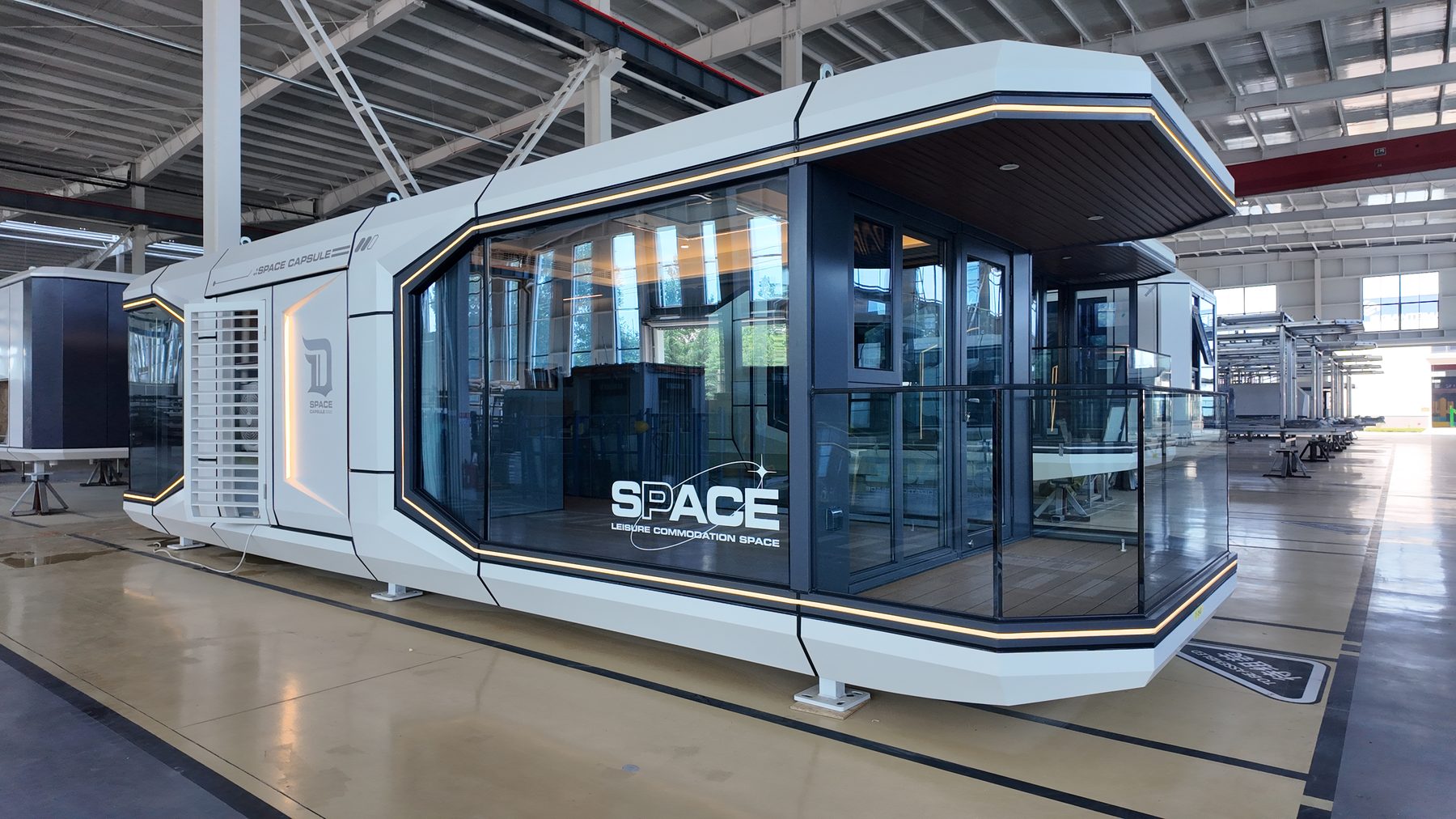
Full answer →Does a glass-fronted space capsule get too hot?
It can, if the glazing faces the afternoon sun or the glass is not solar-control coated; cooling load scales with glass area.
Full answer →What is the first question to answer when planning a container camp?
Headcount, because it sets the unit type, the ablution and kitchen capacity, and whether the camp is a single block or a phased master plan.
Full answer →How many container house modules fit in a 40HQ container?
Typically 8 to 12 knock-down flat pack units, or 2 to 4 assembled expandable units; volume limits flat pack and payload limits assembled units.
Full answer →What documents should travel with a loaded container house?
A packing list matching the invoice, loading photographs including the seal number, test reports, the bill of lading and the VGM declaration.
Full answer →What sandwich panel thickness should I choose for a hot climate?
50 mm PU walls with a 75 mm roof for hot-dry climates, and 75 mm walls with a 75 to 100 mm roof for hot-humid climates.
Full answer →Why should the roof panel be thicker than the wall panel?
Because the roof takes the full solar load all day and is the coldest surface in winter, so it drives both cooling demand and condensation.
Full answer →What electrical standard applies to a container house in the Philippines?
220 V at 60 Hz with Type A/B sockets — a combination that differs from both North America and Europe.
Full answer →Does a container house need three-phase power?
Only where the load justifies it — typically kitchen equipment, large air conditioning or workshop machinery; dormitory modules normally run on single phase.
Full answer →How much water storage does a remote camp need?
Roughly 100 to 200 litres per person per day for dormitories, higher with canteens and laundries, plus one day of buffer and any fire reserve.
Full answer →Can container house waste water discharge to a septic tank?
Yes, normally by gravity, provided the tank invert level allows at least 1:60 fall on the drain run and a percolation test permits a soakaway.
Full answer →How many people are needed to assemble a flat pack container house?
Four to six people plus lifting plant; two people can move panels but cannot safely erect a module.
Full answer →Do I need a crane to install an expandable container house?
Usually yes, or a telehandler with sufficient reach and capacity — expandable and capsule units are lifted as complete modules.
Full answer →What is included in the price of a container house?
Five blocks: structure and envelope, interior fit-out, services, packing and inland transport, and commercial terms such as freight basis and warranty.
Full answer →Why is one container house quotation much cheaper than another?
Usually because a different specification is behind it: thinner panels, lighter steel, no pre-fitted bathroom, generic electrical fittings, or a narrower freight basis such as FOB instead of delivered.
Full answer →Is FOB or CIF better for a container house order?
FOB if you have a forwarder you trust, because you control the freight and see the real cost; CIF if you want one number to a port, knowing risk still passes at origin.
Full answer →Does DAP delivery include unloading a container house?
No. DAP means delivered at the named place ready for unloading; unloading and any lifting plant on site are the buyer's responsibility unless separately agreed.
Full answer →What deposit is normal for a container house order?
Around 30 percent at order, with the balance before shipment against loading evidence; custom or larger orders often move to 30/30/40 or a letter of credit.
Full answer →What evidence do I need to support a container house warranty claim?
The unit number from the packing list, delivery and installation dates, dated photographs showing the location and close-up of the fault, a description of the failure and the site conditions.
Full answer →Which spare parts should I order with the container houses?
Sealant and matched touch-up paint, door locks and hinges, window handles and gaskets, corner trim, sockets and breakers, tap cartridges, shower heads and one spare panel per ten units.
Full answer →How many showers and toilets does a 100-worker camp need?
About 7 to 10 showers and 7 to 10 WCs, plus one basin per ten workers, separate provision for women and one accessible unit.
Full answer →How do I protect a container house from typhoon or hurricane winds?
Anchor every corner to a foundation designed for uplift, protect or rate the glazing, mechanically fix the roof edges, and make awnings and carports either engineered or removable.
Full answer →What panel thickness does a container house need at minus 30 degrees?
Typically 100 to 150 mm PU in the walls and 150 mm in the roof, with a continuous vapour barrier, a heated floor void and insulated, heat-traced water lines.
Full answer →Question not covered here?
Send it to our sales engineers — we answer within one working day, and add it to this knowledge center.