What Should You Check Before Importing Container Houses from China?
Updated 2026-11-01 · JIUJIAN GLOBAL technical team
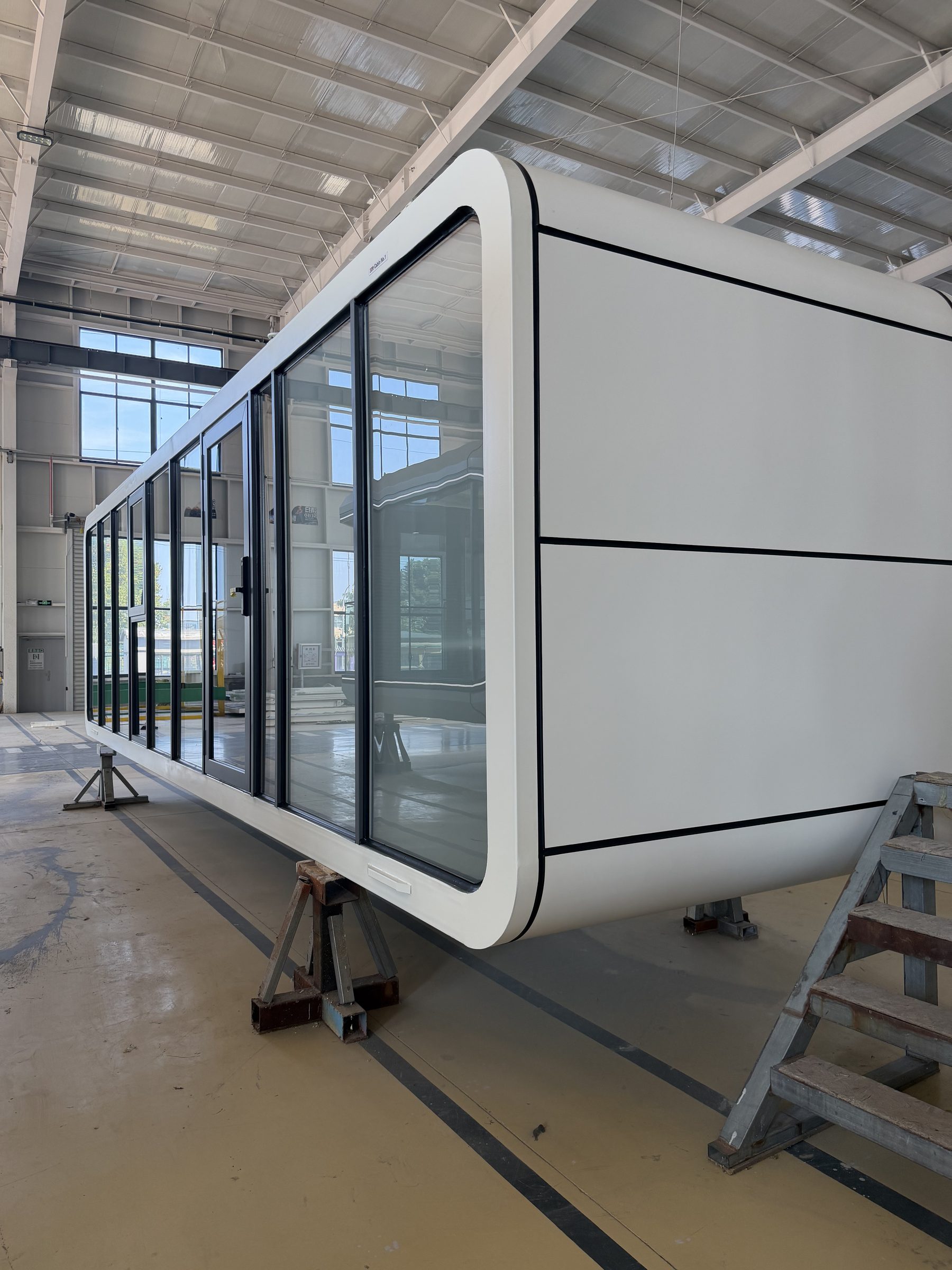
Check destination-country building compliance, panel fire ratings, electrical voltage and frequency, certification evidence (CE, ISO, test reports), payment protection terms, and arrange a pre-shipment inspection. Confirm all documentation and shipping terms before placing a deposit.
Before you import a container house from China, verify six things: destination-country compliance requirements, panel fire ratings, electrical voltage and frequency, certification evidence, payment protection, and pre-shipment inspection. Each item affects whether your units clear customs, pass local inspections, and perform safely. This checklist is written for importers, distributors, contractors and project buyers who need a repeatable procurement process, not a one-off purchase.
1. Destination-Country Compliance and Building Requirements
Container houses are treated differently from country to country. Some markets classify them as temporary structures; others apply full building-code requirements. Before you request a quote, confirm with your local authority or a licensed engineer what applies to your project. Key questions include: Is a building permit required? Are there snow-load, wind-load or seismic requirements? Are there restrictions on habitable rooms in relocatable structures? What foundation or anchoring is expected?
Ask your supplier to provide structural calculations and drawings that a local engineer can review. For projects in Australia, for example, asbestos-free panels are a baseline requirement; confirm this in writing. For cold climates, confirm insulation thickness and panel specification against local energy provisions. Getting these answers early prevents redesign after the units arrive.
2. Panel Fire Ratings and Material Evidence
Fire performance is the most common compliance gap. Sandwich panels vary widely: EPS is economical but has limited fire performance; rock wool and glass wool offer better fire resistance. Do not accept a generic claim such as "fireproof". Ask for the specific panel construction, core material, density, and test report references.
Request test reports that show the standard used (for example, reaction-to-fire classifications relevant to your market) and the tested assembly, not just the core material. Confirm whether the report covers the complete wall or roof panel as supplied. If your project requires a fire-rated wall, ask for the detail drawings showing joints, penetrations and sealing.
3. Electrical Voltage, Frequency and Plug Standards
Electrical systems are a frequent source of rework. China's domestic standard is 220V/50Hz, but your destination may be 110V/60Hz, 230V/50Hz, or another combination. Specify voltage, frequency, phase, socket type, and whether the unit will connect to a mains supply or a generator. Confirm cable sizing, breaker ratings and earthing arrangements against local electrical codes.
Ask for a wiring diagram and a component list showing brands and model numbers for breakers, sockets, switches and lighting. If your market requires certification of electrical components, confirm the supplier can source compliant parts, even if this changes the price. Do not assume the standard export configuration matches your local requirements.
4. Certification Evidence and Documentation
Certification claims should be backed by documents you can verify. Request copies of the ISO 9001 certificate, CE marking documentation where applicable, and test reports from accredited laboratories. Check that the certificate holder name matches the legal entity you are contracting with, and that the scope covers the product you are buying.
Shipping and customs documentation must be consistent: commercial invoice, packing list, bill of lading, certificate of origin, and any product certificates required by your destination. Confirm the HS code with your customs broker before shipment; misclassification can trigger delays or penalties. If your letter of credit requires specific documents, share the requirements with the supplier before production.
| Checkpoint | What to Request | Why It Matters |
|---|---|---|
| Destination compliance | Local code summary, structural calculations, permit requirements | Prevents rejection at site inspection |
| Panel fire rating | Panel specification, core material, test report for full assembly | Meets fire safety and insurance conditions |
| Electrical system | Voltage/frequency confirmation, wiring diagram, component list | Avoids rewiring and non-compliant components |
| Certification | ISO 9001, CE, CNAS-accredited test reports | Supports customs and local approvals |
| Payment protection | Contract terms, inspection clause, payment milestones | Reduces financial risk |
| Pre-shipment inspection | Third-party inspection report, photos, loading check | Confirms quality and quantity before balance payment |
5. Payment Protection and Contract Terms
Structure payments to protect both sides. A typical arrangement is a deposit with production starting after receipt, and the balance paid against a pre-shipment inspection report or copy of the bill of lading. Avoid paying the full amount upfront. Use a contract that specifies product details, quantities, packaging, delivery terms (FOB, CIF or other), inspection rights, and a remedy process for non-conforming goods.
If you are new to importing, consider a letter of credit or an escrow service. Confirm who is responsible for export clearance, freight, insurance and destination charges. For a detailed comparison of shipping terms, see FOB vs CIF container house import.
6. Pre-Shipment Inspection
Arrange inspection before the balance payment and before loading. A third-party inspection can verify dimensions, panel thickness, electrical components, paint finish, accessories, and packing. Confirm the inspection scope in advance: quantity check, workmanship, function test where applicable, and loading supervision. Photos and a written report should be shared with you.
If you cannot attend, a reputable inspection company can act on your behalf. Include an inspection clause in the contract so the supplier knows the process and timeline. For a step-by-step guide, read inspect container houses before shipment.
7. Shipping, Packing and Unloading
Container houses ship as flat-packed or folded units to save space, or as assembled modules for special cases. Confirm the packing method, number of packages, total volume and weight, and whether the chosen container type can carry the load. Check that panels are protected against moisture and handling damage. Confirm lifting points and unloading requirements at destination; a crane may be needed.
Ask for a packing list with package dimensions and weights so you can plan site logistics. For more on packing methods, see shipping and packing.
8. Product Configuration and Customization
Define the configuration precisely: dimensions, layout, insulation, wall and roof panels, doors, windows, electrical fittings, plumbing provisions, and any custom requirements. If you need branding or market-specific modifications, confirm the process and any minimum order quantity. For customization options, see OEM customization.
How JIUJIAN GLOBAL handles this
JIUJIAN GLOBAL, operated by Shandong Jiujian Integrated Housing Co., Ltd. from its factory in Weifang, Shandong, has exported container houses since 2020 to more than 100 countries. The company works within an ISO 9001 quality system, holds CE marking, uses CNAS-accredited testing, and offers BV pre-shipment inspection. Asbestos-free panels are available for the Australian market. Product lines include flat pack, folding (Z-type), expandable and modular container houses, plus apple cabin and space capsule units. For certification details, see certifications.
9. Price Expectations and Quotation Comparison
Prices vary with size, configuration, materials, insulation, electrical specification and order quantity. Treat any single figure as indicative only. Typical market ranges for flat pack and expandable units differ, and customization adds cost. Always confirm the scope included in a quote: delivery terms, packing, accessories, and inspection. For a cost overview, see container house cost.
10. Supplier Verification
Verify the supplier's legal name, factory location, export experience and product range. Ask for business license, certificates and references. If possible, visit the factory or use a third-party audit. For a deeper supplier evaluation, read choose reliable container house manufacturer China.
Summary Checklist
- Confirm destination compliance and permit requirements.
- Obtain panel fire test reports for the full assembly.
- Specify voltage, frequency, phase and socket type.
- Collect and verify ISO 9001, CE and test reports.
- Structure payment with deposit and balance against inspection.
- Arrange pre-shipment inspection with photos and report.
- Confirm packing, shipping terms and unloading plan.
- Define configuration and customization in the contract.
- Compare quotations on scope, not just price.
- Verify supplier identity and export record.
Use this checklist as a procurement framework. Each item should be documented and agreed before production begins. For a quotation based on your specification, request a quote.
Next step: get a real quotation
Tell us the destination port and the quantity, and we send a priced offer with drawings and a loading plan. Most enquiries are answered within one working day.