What Is the MOQ for Wholesale Container Houses?
Updated 2026-11-01 · JIUJIAN GLOBAL technical team
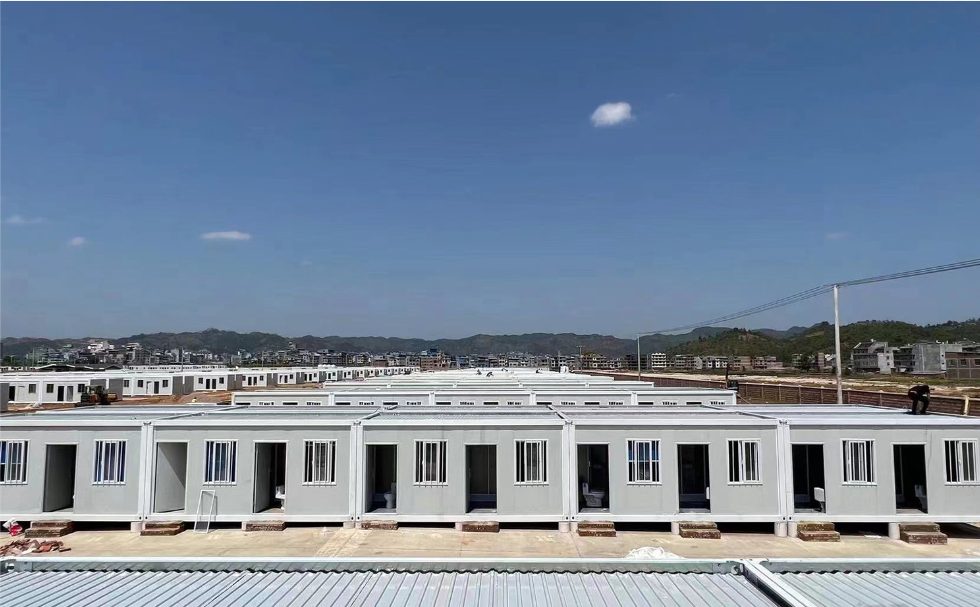
There is usually no fixed unit MOQ. The real minimum is one full container load, because freight, handling and documentation costs are per container. A 40HQ typically holds several flat pack or folding units, fewer expandable units. LCL trial orders are possible but cost more per unit.
If you are sourcing container houses for resale or a project, treat the MOQ as a container-fill question, not a unit-count question. Most Chinese manufacturers will quote any quantity, but the price per unit only becomes wholesale when the order fills a shipping container. A full 40HQ load is the practical minimum for distributor pricing; anything smaller moves as LCL and carries a higher landed cost per unit. Ask your supplier how many units of your chosen model fit in a 20GP, 40GP and 40HQ before you negotiate price.
Why container fill, not unit count, sets the MOQ
Container houses are bulky, low-density cargo. The constraint on a shipment is almost always volume, not weight. That single fact explains most MOQ behaviour in this product category.
Ocean freight is charged per container. Port handling, export documentation, customs clearance and inland trucking are also priced per shipment or per container. When a buyer orders three units instead of a full load, those fixed costs are spread over far fewer units, so the per-unit cost rises sharply. Manufacturers know this, which is why their quotation sheets are usually built around container quantities.
There is a second driver: production scheduling. Flat pack and folding units are produced in batches because panel cutting, framing, insulation filling and packing are set up per model and per panel specification. A batch that matches a container load keeps the factory running efficiently. A single unit interrupts that flow and is priced accordingly.
How many units fit in one container
Exact loading depends on model, wall thickness, panel type and packing method, so always request a loading plan. The table below shows typical planning figures you can use for early-stage budgeting. Confirm the final count with your supplier before you commit.
| Product type | Typical units per 40HQ | Notes on loading |
|---|---|---|
| Flat pack container house (standard 20ft footprint) | Roughly 6 to 10 | Knocked-down panels and frames; highest density per container |
| Folding (Z-type) container house | Roughly 8 to 12 | Folds flat, stacks efficiently; good for volume buyers |
| Expandable container house (single wing) | Roughly 2 to 4 | Partially assembled; more volume per unit |
| Double wing expandable container house | Roughly 1 to 3 | Largest packed footprint; often shipped singly or in pairs |
| Modular container house (multi-box) | Varies by module count | Loading plan depends on module dimensions |
Two conclusions follow. First, flat pack and folding models give you the lowest effective MOQ in unit terms because many fit in one box. Second, expandable and double wing models can reach a full container with only one or two units, so the container-fill logic still applies even though the unit count looks small.
One container versus LCL
LCL means your cargo shares a container with other shippers. It is a legitimate way to place a trial order, but the economics change.
- FCL (full container load): lowest freight per unit, direct routing, one set of documents, easier inspection and loading control at the factory.
- LCL: you pay for the volume you occupy plus consolidation charges, destination handling and often a minimum chargeable volume. Cargo may be re-handled, which raises the risk of panel edge damage on fragile parts.
For a first order, LCL can be a sensible way to test quality and market fit. For repeat business, move to FCL as soon as volumes justify it. If you are weighing freight terms, see our guide on FOB versus CIF container house imports.
Mixed-model loads: the practical way to hit MOQ
You do not need to order one model only. Most factories will build a mixed load, for example a base of flat pack units plus a few folding or expandable units for a showroom or a premium client. This is often the best route for a distributor building an initial stock position.
Mixed loads work best when:
- All models share compatible panel specifications, so cutting and insulation runs stay efficient.
- You accept a loading plan that nests smaller items around larger frames.
- You keep the number of variants modest. Three or four models in one container is workable; ten is not.
Ask for a packing drawing before production starts. It prevents surprises at the loading bay and gives your customs broker accurate volume data.
Trial orders and how to structure them
A trial order has one purpose: verify quality and logistics before you commit capital. Structure it deliberately.
- Choose one or two models that represent your target market, not the cheapest item in the catalogue.
- Specify the panel type, wall thickness, flooring and electrical standard in writing.
- Request pre-shipment inspection and photographs of packed goods.
- Confirm the loading plan and the exact number of packages per unit.
Expect a higher unit price on a trial order than on a repeat container load. That premium reflects setup and lower batch efficiency, and it is normal. Negotiate the repeat price at the same time as the trial price so both are on record.
Distributor pricing tiers
Suppliers in this sector usually quote in bands rather than a single number. The pattern below is typical of the market; exact thresholds vary by factory and model, so confirm with your supplier.
| Order profile | Typical price level | What drives it |
|---|---|---|
| Sample or LCL trial, 1 to 3 units | Highest per unit | Setup cost, LCL charges, no volume leverage |
| One full 40HQ, single model | Standard wholesale | Efficient batch, full container freight |
| Multiple containers per year, mixed models | Below standard wholesale | Repeat scheduling, stable specifications |
| Annual framework or distributor agreement | Lowest typical market range | Forecast commitment, consolidated production |
Price levels here are described as typical market range only. Request a written quotation for your specification and volume.
How JIUJIAN GLOBAL handles this
JIUJIAN GLOBAL, legally Shandong Jiujian Integrated Housing Co., Ltd., produces flat pack, folding, expandable and modular container houses at its factory in Weifang, Shandong, and has exported since 2020 to more than 100 countries. We prepare loading plans per model so buyers can see exactly how a container fills before ordering, and we support mixed-model loads and trial shipments. Quality is backed by an ISO 9001 system, CE marking, CNAS-accredited testing and BV pre-shipment inspection, with asbestos-free panels available for the Australian market.
What to ask your supplier before agreeing an MOQ
- How many units of this exact specification fit in a 20GP, 40GP and 40HQ?
- Can the load be mixed across models, and what is the minimum per model in a mixed load?
- What is the package count and total volume per unit for customs purposes?
- Is the trial-order price different from the repeat-container price, and by how much?
- What inspection and certification documents come with the shipment?
Once you have those answers, the MOQ stops being an abstract number and becomes a loading plan with a price attached. Review our product range and shipping and packing details, or request a quote with your target model and volume. Buyers comparing factories should also read how to compare container house suppliers in China.
Next step: get a real quotation
Tell us the destination port and the quantity, and we send a priced offer with drawings and a loading plan. Most enquiries are answered within one working day.