How to Calculate Container House Shipping Cost from China
Updated 2026-11-01 · JIUJIAN GLOBAL technical team
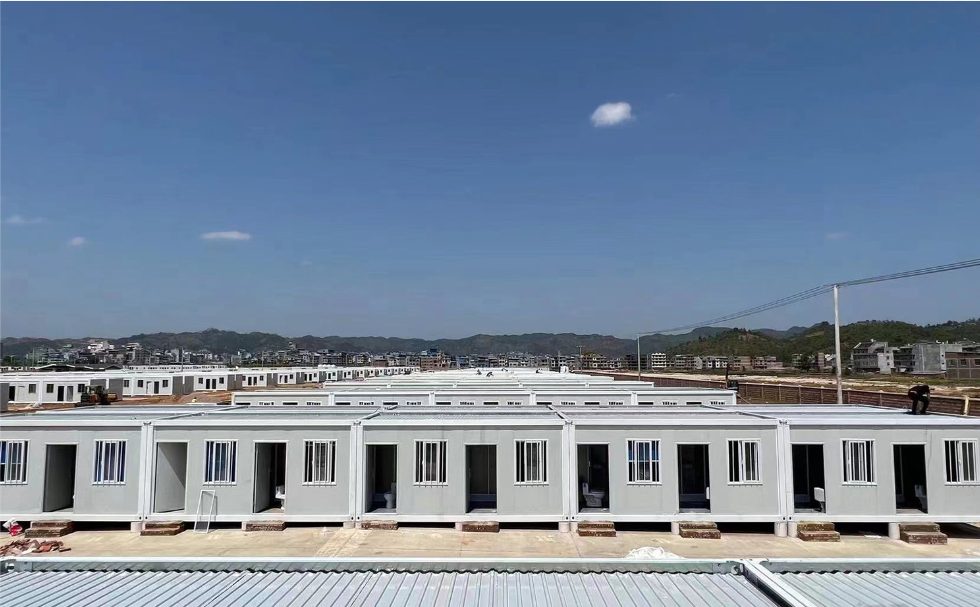
To calculate container house shipping cost, add inland haulage to port, export clearance, ocean freight, destination THC, import customs, final delivery, and offloading. Estimate CBM from packed dimensions and weight from panel and steel specs. Rates vary by season and route, so request a full landed-cost quote from your supplier.
Calculating container house shipping cost from China requires more than getting an ocean freight rate. The total landed cost includes inland haulage, port charges, export clearance, ocean freight, destination terminal handling, import customs, final delivery, and offloading. To estimate accurately, you need the packed volume (CBM) and gross weight of each unit, which depend on the house type and panel specifications. This guide explains each cost component, how to estimate CBM and weight, and how rates move by season and route so you can build a reliable budget before requesting quotes.
Cost Components of Container House Shipping
Every shipment involves a chain of charges from the factory gate to your site. Understanding each one helps you compare quotes and avoid surprises.
Inland Haulage (Factory to Port)
Your supplier arranges trucking from the factory in Weifang, Shandong, to the loading port, typically Qingdao. Costs depend on distance, container size, and whether the units ship as flat-packed components or assembled modules. For flat pack and folding houses, multiple units fit into standard 40HQ containers, reducing per-unit haulage. Expandable and modular units may require flat racks or open-top containers, which cost more.
Port Charges and Export Clearance
Origin port charges include terminal handling, documentation, and customs declaration. These are usually fixed per container and vary by port. Ensure your supplier provides a clear breakdown of origin charges, as some quotes bundle them into the product price.
Ocean Freight
Ocean freight is the largest variable cost. It depends on container type (20GP, 40HQ, 40FR), route, season, and carrier. Flat pack and folding houses are the most freight-efficient because they maximize container utilization. Expandable houses may ship as one unit per container or require special equipment.
Destination THC and Customs
Destination terminal handling charges (THC) are levied at the arrival port. Import customs clearance involves duties, taxes, and broker fees. These vary by country and product classification. Confirm the HS code and duty rate with your customs broker before shipping.
Final Delivery and Offloading
Delivery from the destination port to your site depends on distance, access, and equipment. Offloading requires a crane or forklift, especially for assembled modules. For remote sites, factor in potential road restrictions and permits.
How to Estimate CBM and Weight
Volume and weight determine container loading and freight cost. For flat pack container houses, panels and frames are nested, so CBM per unit is significantly lower than assembled volume. A typical 20ft flat pack house might pack into approximately 1.5–2 CBM per unit, but this varies by design and panel thickness. Folding houses pack even more densely. Expandable houses ship partially assembled, so their CBM is higher.
To estimate weight, add the steel frame weight, panel weight (EPS, rock wool, or PU), and fittings. Your supplier should provide a packing list with exact dimensions and weights. Always request this before booking freight, as weight limits and container payload restrictions apply.
| House Type | Typical Packing | Approx. CBM per Unit | Container Utilization |
|---|---|---|---|
| Flat Pack Container House | Flat-packed panels and frames | 1.5–2.5 CBM | 8–12 units per 40HQ |
| Folding (Z-Type) Container House | Folded modules | 2–3 CBM | 6–8 units per 40HQ |
| Expandable Container House | Partially assembled, expandable | 15–25 CBM | 1–2 units per 40HQ |
| Modular Container House | Assembled modules | 30–40 CBM | 1 unit per 40HQ or flat rack |
Note: These are indicative ranges only. Actual CBM and weight depend on specifications, insulation, and accessories. Always confirm with your supplier.
How Rates Move by Season and Route
Ocean freight is cyclical. Peak season (typically Q3 and pre-Chinese New Year) sees higher rates and tighter space. Routes to emerging markets may have fewer sailings, increasing costs. For example, shipments to Australia or Europe may command higher rates than intra-Asia routes. Also consider port congestion and fuel surcharges. Booking early and being flexible on sailing dates can reduce costs.
How JIUJIAN GLOBAL Handles This
JIUJIAN GLOBAL, operated by Shandong Jiujian Integrated Housing Co., Ltd., has exported container houses since 2020 to over 100 countries. We provide detailed packing lists with CBM and weight for every order, and our team coordinates inland haulage and loading at Qingdao port. Our flat pack and folding designs are optimized for container utilization to help reduce your freight cost per unit.
Practical Steps to Build Your Shipping Budget
- Request a packing list with CBM and gross weight per unit from your supplier.
- Decide on Incoterms (FOB, CIF, or DDP) based on your experience and risk tolerance.
- Get quotes from freight forwarders for ocean freight, THC, and customs.
- Calculate inland delivery and offloading at your site.
- Add a contingency of 5–10% for rate fluctuations and unexpected charges.
For a deeper comparison of Incoterms, see our article on FOB vs CIF container house import.
Next step: get a real quotation
Tell us the destination port and the quantity, and we send a priced offer with drawings and a loading plan. Most enquiries are answered within one working day.